One published guide puts emergency tree removal at $879 to $6,150, or about 2 to 3 times a scheduled job, with trees on houses and power lines at the top of the range. A standard HO-3 policy usually pays to remove a tree that hits a covered structure, often capped near $500 per tree and $1,000 per loss. Yard-only falls usually are not. Check your policy, and get a written invoice for your storm emergency claim.
- Emergency removal range
- $879 to $6,150 (GoTreeQuotes)
- Emergency premium
- About 2x to 3x a scheduled job
- Typical removal coverage
- $500 to $1,000 (Triple-I)
- Sample HO-3 cap
- $1,000 per loss, $500 per tree
- Tree in yard, no damage
- Usually not covered
- Line down?
- Stay back, call 911 and SCE
On this page
- How much does emergency tree removal cost?
- Why storm work costs more: roofs, cranes, and timing
- Does homeowners insurance pay for tree removal?
- Debris removal caps and your deductible
- How to document the damage for your claim
- Santa Ana winds and atmospheric rivers in Ventura County
- Downed SCE lines: stay away and call 911
- Preventing the next failure
- FAQs
- Sources
How much does emergency tree removal cost?
Emergency tree removal typically costs far more than a scheduled takedown. GoTreeQuotes, a national cost guide, reports an emergency range of $879 to $6,150 with a national average of $2,450, and says to expect 2 to 3 times the regular price. After-hours and weekend work can climb as high as $10,500 in its data.
For comparison, HomeGuide reports routine removal of a medium tree (30 to 60 feet) at $500 to $1,500. Our tree removal cost guide breaks down scheduled pricing in more detail.
These are published national figures, not our rates, and no source we found lists a separate Ventura County figure. Your real number comes from a written estimate after we see where the tree landed and what it is resting on.
| Situation | Average | Low | High |
|---|---|---|---|
| Tree on power lines | $4,250 | $1,950 | $8,200 |
| Tree on a house | $3,950 | $1,500 | $6,350 |
| Split trunk | $2,150 | $1,200 | $5,200 |
| Leaning tree after a storm | $1,950 | $1,320 | $3,460 |
| Tree on a fence | $1,875 | $1,290 | $3,290 |
| Tree down in the yard | $1,320 | $950 | $2,500 |
| Branch on power lines | $950 | $550 | $1,500 |
Why storm work costs more: roofs, cranes, and timing
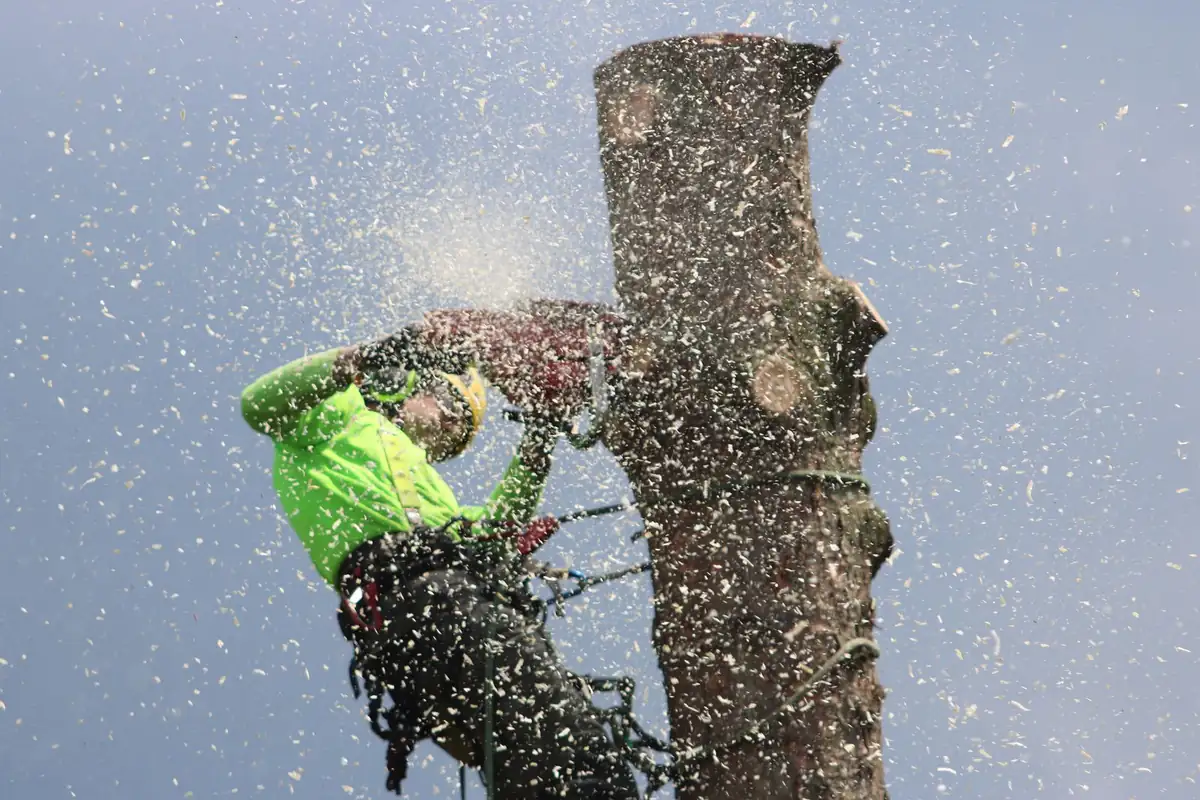
A tree lying on a roof is loaded in ways a standing tree is not. Limbs can be holding the trunk off the ridge, and cutting the wrong one first can drop the whole weight onto rafters. Crews take the tree apart in small, rigged pieces or lift sections off with a crane, and every step is slower than a normal removal.
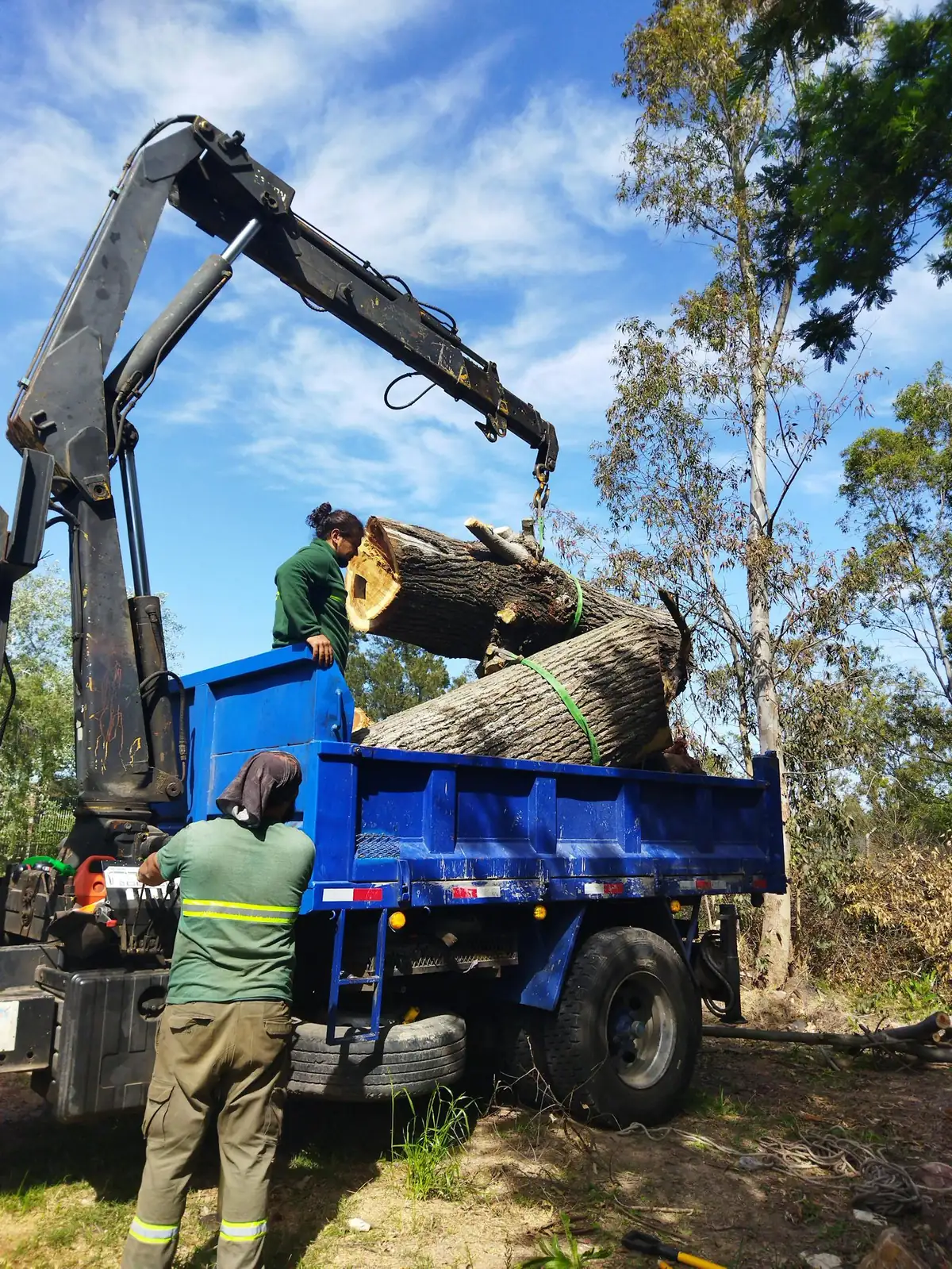
Crane removal is common when a large eucalyptus or pine comes down across a house in Wood Ranch or Indian Hills and there is no safe place to lower pieces. The crane rental, operator, and setup time add real cost, which is a big part of why the on-a-house average above sits near $4,000.
Timing matters too. After a Santa Ana wind event, every tree crew in the county is busy, so the first few days carry the highest premium. If the tree is not threatening the house, people, or access, waiting for a scheduled slot can save serious money.
Our crew works to the ANSI Z133 safety standard on every storm job. See how we handle these calls on the storm and emergency tree service page.
Does homeowners insurance pay for tree removal?
Sometimes. The Insurance Information Institute (Triple-I) explains that if a tree hits your home or another insured structure, such as a detached garage, a standard homeowners policy covers the damage to the structure and its contents. That applies to trees felled by wind, lightning, or hail.
Removal is a separate, smaller bucket. Triple-I says that when a tree hits an insured structure, the policy covers removing it, generally up to about $500 to $1,000 depending on the insurer and policy. If the tree did not hit a structure, there is generally no coverage for debris removal.
It does not matter much whose tree it was. Triple-I says you file with your own insurer even if the tree came from a neighbor's yard. Your insurer may then try to recover from the neighbor's insurer through subrogation, and if that works you may get your deductible back.
| What happened | Structure damage | Tree removal |
|---|---|---|
| Your tree falls on the house in a windstorm | Generally covered | Covered up to a sublimit |
| Neighbor's tree falls on your house | File with your insurer | Covered up to a sublimit |
| Tree falls in the yard, hits nothing | Not applicable | Generally not covered |
| Tree blocks the driveway | Not applicable | May be covered |
| Tree blocks an accessibility ramp | Not applicable | May be covered |
| Tree dies from neglect, then falls | Possible dispute | Possible dispute |
Triple-I also notes that poor maintenance is not covered by homeowners insurance. A tree that was visibly dead for years is a harder claim than a healthy tree snapped by wind.
Debris removal caps and your deductible
The caps come straight from the policy form. The ISO sample HO-3 form (HO 00 03 10 00) published by Triple-I pays up to $1,000 to remove trees felled by windstorm, hail, or the weight of ice, snow, or sleet. It also says no more than $500 of that limit will be paid for any one tree, regardless of how many trees fall in one loss.
That same sample form covers removal only if the tree damages a covered structure, or blocks a driveway or a ramp built to help a person with a disability. Triple-I's consumer guide gives the general removal limit as $500. Your carrier may use different numbers, so read your declarations page and endorsements.
Your deductible applies to the claim as a whole. If the structural damage is small, the deductible can swallow most of the payment, and filing may not be worth it. The California Department of Insurance describes the deductible as the portion of the loss you pay before your insurer begins to pay. Ask your agent how it applies before you file.
Tarping counts. The sample HO-3 form includes a Reasonable Repairs provision for measures taken solely to protect damaged property from further damage, and the California Department of Insurance says insurers reimburse reasonable protective costs when you save receipts. We do roof tarping after storm removals and itemize it on the invoice.
How to document the damage for your claim
Good documentation speeds up a claim and limits arguments. The California Department of Insurance recommends making lists of damaged items, photographing the damage, saving receipts, and holding off on extensive permanent repairs until an adjuster has seen the home.
- Photograph the tree where it fell, from several angles, before anything is cut. Include the roof, fence, vehicles, and the root plate or broken trunk.
- Take a wide shot that shows the tree and the house together, plus close-ups of every point of contact.
- Call your insurer early and keep a log of every call, name, and claim number.
- Ask for a written estimate, then a written invoice that separates tree removal, debris haul-off, and tarping. We provide written invoices and documentation for insurance claims.
- Save receipts for plastic sheeting, plywood, or anything else you buy to protect the house.
- Do not throw out damaged items until the adjuster says it is okay.
Santa Ana winds and atmospheric rivers in Ventura County
Simi Valley sees two kinds of tree-failure weather. Santa Ana winds blow hot and dry from the northeast, mostly in fall and winter, and they tend to snap limbs and topple shallow-rooted trees along exposed ridges near Tapo Canyon Rd and the Santa Susana Knolls.
Winter atmospheric river storms do the opposite kind of damage. Days of heavy rain soak the soil, and saturated ground lets large trees uproot entirely, often with the root plate still attached. Eucalyptus, pines, and tall ornamental trees on slopes are frequent casualties.
Both events show up in claims as windstorm losses, which is the peril the sample HO-3 tree removal coverage is written around. Fire is a separate issue in this area, and CAL FIRE guidance on defensible space is worth following for trees near the house.
If a storm drops a tree on your home, call (805) 902-1045 any time and leave a message. Regular hours are Monday through Saturday, 7am to 6pm.
Downed SCE lines: stay away and call 911
If a tree or branch is touching a power line, do not go near it. Southern California Edison says to assume every downed line is energized, stay at least 100 feet away from the line and anything touching it, and call 911. You can report the hazard to SCE at 1-800-611-1911.
Wet grass and puddles can carry current, which is why storm conditions make downed lines even more dangerous. Never try to pull a limb off a line or let kids near the tree.
We stop work and call in any tree on SCE lines. Clearing trees from energized conductors is utility work, and only after the line is made safe can a tree crew remove the rest of the tree.
Preventing the next failure
The cheapest emergency removal is the one that never happens. Regular inspections catch the warning signs: deadwood, cracks, included bark at narrow unions, fungal growth at the base, and roots lifting on the windward side. An ISA Certified Arborist is the right person for a formal risk assessment.
Structural pruning and crown thinning reduce wind load without topping the tree. We prune to the ANSI A300 standard, which favors proper cuts over heavy, harmful reductions. Our tree trimming and tree health pages show what that looks like, and the tree trimming cost guide covers what to budget.
If a tree is already leaning, cracked, or dead over the roof, removing it on a scheduled day costs a fraction of a storm-night call. Planning ahead also helps your insurance position, since neglect is not a covered peril.
This guide is general information, not legal or insurance advice. Check your own policy and talk with your agent. For a written estimate on a hazard tree in Simi Valley, Camarillo, or Porter Ranch, call (805) 902-1045 or contact us online.
Frequently Asked Questions
How much does emergency tree removal cost?+
GoTreeQuotes, a national cost guide, reports emergency tree removal at $879 to $6,150, with a national average of $2,450 and about 2 to 3 times the price of a scheduled job. Trees on houses average around $3,950 and trees on power lines around $4,250 in its data. Those are published ranges, not our rates, so get a written estimate.
Does homeowners insurance cover a tree that falls on my house?+
Usually, if a covered peril like wind knocked it down. The Insurance Information Institute says a standard policy covers structural damage and contents, plus tree removal up to roughly $500 to $1,000. Your deductible still applies, and policies vary, so read your declarations page and call your agent before assuming a dollar amount. This is not insurance advice.
Will insurance pay to remove a tree that fell in my yard?+
Generally no. Triple-I says there is usually no debris removal coverage when a fallen tree does not hit an insured structure. Some policies pay if the tree blocks your driveway or a ramp built to help a person with a disability. Check your policy, and if you are paying out of pocket, a scheduled removal costs less than an emergency call.
What if my neighbor's tree falls on my house?+
You normally file with your own homeowners insurer, according to the Insurance Information Institute. Your insurer may then pursue the neighbor's insurer through subrogation, and if that succeeds you may be reimbursed for your deductible. Recovery is more likely when the tree was visibly dead or poorly maintained. Photograph everything before the tree is cut up.
What is the debris removal limit on an HO-3 policy?+
The ISO sample HO-3 form published by Triple-I pays up to $1,000 per loss to remove fallen trees, with no more than $500 for any one tree. Coverage applies when the tree damages a covered structure or blocks a driveway or accessibility ramp. Insurers can use different limits or endorsements, so confirm the numbers in your own policy.
What should I do right after a tree hits my home?+
Get everyone out of the damaged area, stay at least 100 feet from any downed line, and call 911 if lines are involved. Photograph the damage before anything is moved, call your insurer, and save receipts for protective materials. Then call (805) 902-1045 any time and leave a message so we can schedule removal and roof tarping.
Can I make temporary repairs before the adjuster comes?+
Yes, and you generally should. The California Department of Insurance says to protect your property from further damage, such as covering roof openings with plastic sheeting or plywood, and to save receipts. Hold off on extensive permanent repairs until the adjuster inspects. We provide roof tarping and storm cleanup with an itemized invoice.
Sources
Price ranges above come from these published cost guides and public agencies. They are national or regional averages, not a quote. Your real price comes from a written, on-site estimate.
- GoTreeQuotes: Emergency Tree Removal Cost
- HomeGuide: Tree Removal Cost
- Insurance Information Institute: If a tree falls on your house, are you covered?
- Insurance Information Institute: Am I Covered?
- Insurance Information Institute: Sample HO-3 Policy Form (HO 00 03 10 00)
- California Department of Insurance: Residential Property Claims Guide
- Southern California Edison: Report a Downed Power Line